The Daily Feed
Market notes, sourcing insights, and practical know-how from the NTLS Feed & Grain team. We move DDG, sunflower meal, corn, chickpeas, and other feed ingredients across the Midwest and Mountain West every day, and this is where we share what we're seeing: price trends, supply shifts, freight conditions, and tips to help feedlots, ranchers, and manufacturers buy smarter.
Reach Us Directly
Give us a call, send us a text, or an email — we're easy to get ahold of and quick to respond.
701-809-9058
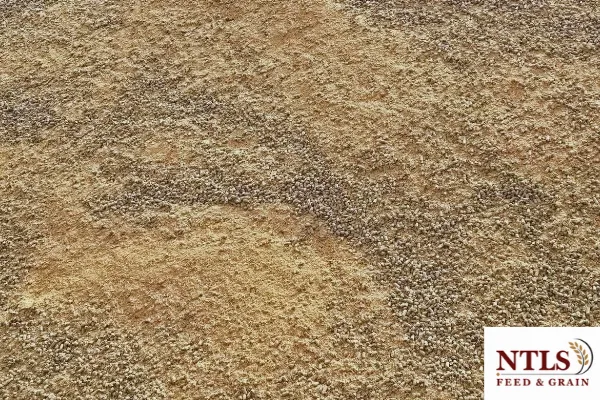
Soy Hull Pellets for Cattle: Nutrition, Feeding Tips & Bulk Delivery
Soy Hulls & Soy Hull Pellets: The Fiber Feed That Works Like Energy
When hay gets tight, forage quality is poor, or grain gets expensive, a lot of cattle producers turn to a feed that quietly does a little bit of everything: soy hulls.
Here’s what they are, what’s in them, how to feed them, and what university research says about how they stack up against corn and hay.
What Are Soy Hulls?
Soy hulls are the thin outer coat of the soybean, removed during soybean processing. The hulls are toasted to make them safe for livestock, then ground and sold either loose or as pellets.
What makes them valuable is their fiber. Most fiber sources, like straw or mature hay, are hard for cattle to digest. Soy hull fiber is very low in lignin, so rumen microbes break it down quickly and turn it into energy. Soy hulls feed more like an energy source than a roughage.
Nutrient Content of Soy Hulls
Typical values on a dry matter basis:
Nutrient | Typical Value |
|---|---|
Dry Matter | 90–91% |
Crude Protein | 11–12% (range 9–14%) |
Crude Fat | 2.2% |
Total Digestible Nutrients (TDN) | 64–80% depending on the diet |
Neutral Detergent Fiber (NDF) | 67% |
Acid Detergent Fiber (ADF) | 50% |
Calcium | 0.49% |
Phosphorus | 0.18% |
A few things stand out:
More protein than corn. Soy hulls carry slightly more crude protein than corn grain.
Energy depends on how you feed them. TDN runs highest, up to around 80%, when soy hulls supplement a forage-based diet.
High fiber, but not “scratchy” fiber. The small particle size means soy hulls don’t replace the effective fiber cattle get from long-stem hay.
Very little starch, making them easier on the rumen than grain.
Byproduct feeds vary by source and load. Testing your feed is always a good idea when buying in bulk.
Soy Hulls vs. Corn
On paper, soy hulls have less energy per pound than corn. For cattle on forage-based diets, though, research has repeatedly shown soy hulls perform about the same as corn as a supplement, especially when fed around 0.5% of body weight. Soy hulls help cattle digest their forage better, while starch from corn can actually slow forage digestion.
What the research shows:
Growing calves: In a North Carolina State study, growing calves on a hay-based diet performed similarly on soy hulls or corn.
Steers on pasture: Steers on grass gained about the same, roughly 2 lb/day, on either soy hulls or corn, and both outgained unsupplemented steers.
Creep and weaning: Soy hulls have matched corn as a creep feed. They’re very palatable, so calves at weaning get on feed quickly.
Where corn still wins: In high-grain feedlot finishing diets, soy hulls gave similar gains but poorer feed conversion than corn. Soy hulls shine in forage-based programs.
Soy Hulls vs. Hay: Stretching Your Forage
This is where soy hulls really earn their keep, especially in drought years or when hay is short.
1 lb of soy hulls can replace about 1.5–2 lb of low-to-medium quality hay on a dry matter basis.
They work with your forage, not just in place of it. Soy hulls help rumen microbes get more out of lower-quality forage. Cattle often end up eating more total feed, not less, and make better use of what they eat.
Winter cow research: In one study with gestating beef cows, replacing part of the hay with soy hulls meant cows lost less weight over the winter, and each cow saved several hundred pounds of hay.
When you compare soy hulls to other feeds, look at cost per pound of the protein and energy the animal actually eats, not just cost per ton. Soy hulls often come out ahead in forage-based programs.
Where Soy Hulls Fit Best
Winter supplementation for beef cows
Stretching hay during drought or short forage years
Pairing with low-to-medium quality forage like mature hay, stalks, or dormant grass
Backgrounding and stocker cattle
Replacement heifer rations
Creep feeding and weaning diets
They’re also used in dairy rations and are a good fit for sheep and goats on forage-based diets.
Soy Hulls in Dairy Rations
Soy hulls aren’t just for beef cattle. They’re a well-established ingredient in dairy rations, too.
Replacing corn: A research review on soy hulls in dairy diets found they can replace corn grain for up to about 30% of the ration’s dry matter in high-grain diets without hurting digestion, rumen fermentation, or cow performance. Follow-up trials tested replacement at 10% to 40%. Going past 30% started to cut milk yield.
Replacing forage: Soy hulls can also replace part of the forage, up to about 25% of dietary dry matter, as long as the ration still has enough effective fiber.
Where the limits are:
They can’t replace forage completely. Soy hulls don’t have the structural fiber cows need to chew cud and keep rumen pH stable.
Don’t swap out too much starch. Replacing too much grain with soy hulls can reduce microbial protein production and milk components.
For dairies, soy hulls work best as a partial replacement for corn or forage, balanced by a nutritionist, to bring in digestible fiber energy with less starch.
Loose Soy Hulls vs. Soy Hull Pellets
Loose soy hulls
Light, fluffy, and dusty
Fewer tons per truckload
Prone to bridging in bins and feeders
Best suited to mixer-wagon operations
Soy hull pellets
Pelleting roughly triples the bulk density, so you get far more tons per load and better value on freight
Flow well through bins, augers, and self-feeders
Less dust and less waste
Pelleting doesn’t reduce intake or digestibility
For most ranches and smaller operations, pellets are the easier choice to store, handle, and feed.
Feeding Guidelines
Target 20–30% of the diet. On a dry matter basis, that range is often the sweet spot for soy hulls.
Keep long-stem forage in the diet. Hay or grazing slows how fast soy hulls move through the rumen, giving microbes more time to digest the fiber. Aim for at least a third of the diet as long-stem forage.
Watch for bloat. Soy hulls ferment quickly. Feeding them at high levels, or alone at more than 7 lb/head/day, raises bloat risk. Long-stem hay and an ionophore can help. Ask your vet or nutritionist.
Step cattle up gradually, as with any ration change.
Keep pellets dry. Moisture breaks down pellets and invites mold.
Why Source Soy Hulls Through NTLS Feed & Grain?
Soy hull supply moves with soybean processing volumes and seasonal demand, and good loads don’t stay available for long, especially heading into winter. NTLS Feed & Grain works the market every day to find consistent, quality product for our customers.
Bulk loads of soy hull pellets and other feed ingredients
Delivered on our own trucks through Lacher Logistics across North Dakota, South Dakota, Montana, and Wyoming
Real people who know feed and will help you figure out what fits your operation
Frequently Asked Questions
Are soy hulls good for cattle?
Yes. Soy hulls provide highly digestible fiber, moderate protein, and very little starch. In forage-based diets, research shows they perform similarly to corn as a supplement.
How much hay can soy hulls replace?
Roughly 1 lb of soy hulls can replace 1.5–2 lb of low-to-medium quality hay on a dry matter basis. Cattle still need long-stem forage, so soy hulls shouldn’t be the only feed.
How much soy hulls should I feed?
As a general guideline, about 20–30% of the diet on a dry matter basis, with long-stem forage making up at least a third. Work with your nutritionist for your herd.
Can soy hulls be fed to dairy cows?
Yes. Research shows soy hulls can replace corn for up to about 30% of the diet’s dry matter, or forage for up to about 25%, as long as the ration keeps enough effective fiber. Work with your dairy nutritionist on inclusion rates.
Are soy hull pellets better than loose hulls?
Pellets are about three times denser, less dusty, and easier to handle, with no loss in digestibility. For most operations, they’re the more practical choice.
Do you deliver soy hull pellets?
Yes. NTLS Feed & Grain delivers bulk loads across ND, SD, MT, and WY.
Get on the Schedule
Winter feeding is right around the corner, and good loads move fast this time of year. Call NTLS Feed & Grain to check soy hull pellet availability and get your load scheduled.
📞 701-809-9058
NTLS Feed & Grain: sourcing feed ingredients that keep your operation moving.
Sources
Barrett, J.J. Soy Hulls as a Supplement for Livestock. West Virginia University Extension. Last reviewed February 2024.
Berger, Aaron. Soybean Hulls Can Be an Exceptional Supplement for Forage. University of Nebraska–Lincoln Extension (UNL Beef). July 1, 2026.
Nutritional Properties and Feeding Values of Soybeans and Their Coproducts, “Soybean Hulls in Diets Fed to Dairy Cows.” ScienceDirect. Citing Titgemeyer (2000), Ipharraguerre and Clark (2003), and Ipharraguerre et al. (2002).
Disclaimer: The information in this article is provided for general educational purposes only. All feed products should be fed as part of a balanced diet that meets the specific nutritional needs of your herd. NTLS Feed & Grain makes no representations or warranties, express or implied, regarding the suitability of any product for your animals’ specific requirements. Feeding rates and research results mentioned are general guidelines only, and actual needs will vary based on the total ration, animal condition, and feed intake. Always consult your veterinarian, nutritionist, or farm consultant before making changes to your feeding program.

Who We Serve
We work with operations of all sizes across the Upper Midwest and Western United States. If agricultural commodities are part of your business, we can be part of your supply chain.
Feed & Pet Food Mills & Manufacturers
Reliable ingredient supply to keep
your production running on schedule
Dairy Operations
Dependable supply of feed ingredients to support milk production and herd performance
Farmers & Producers
Outlets for specialty crops, culls, and
co-products that need a reliable buyer
Cattle Feedlots & Stocker Operations
Consistent sourcing of energy and protein ingredients across the feeding cycle
Contact
Quick Links
© 2026 NTLS Feed & Grain. All Rights Reserved.